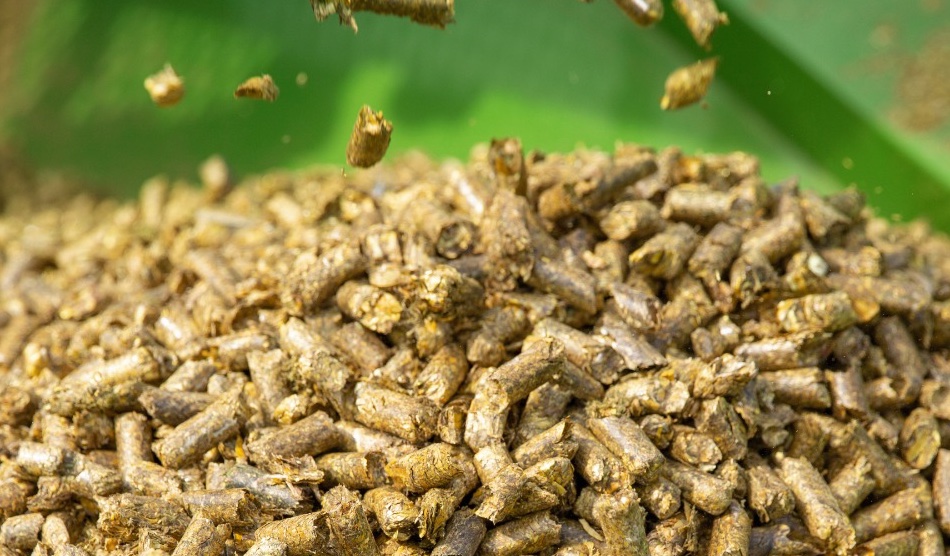

How are MaBi Power Pellets made?
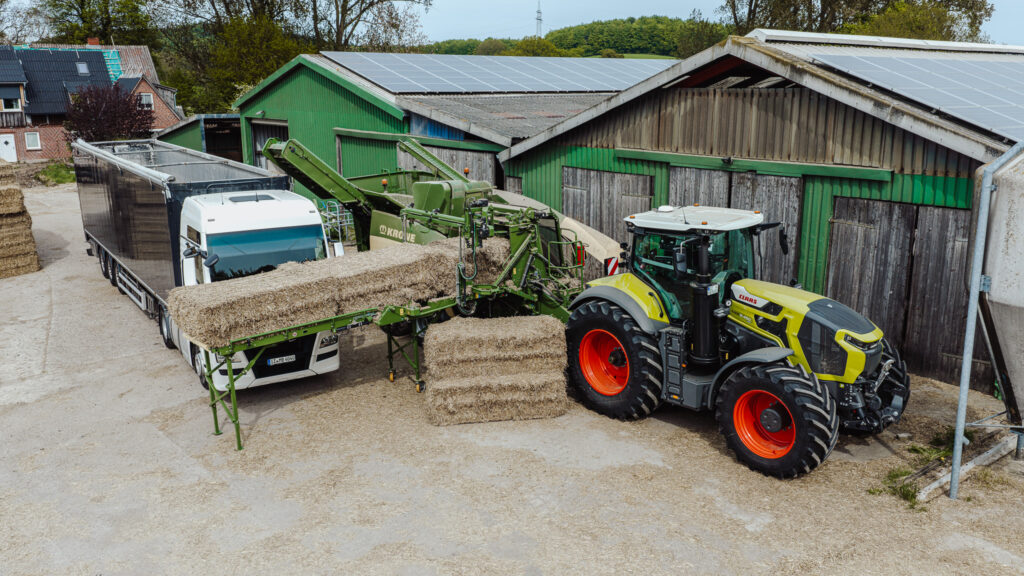
Our MaBi Power Pellets are produced using the Krone Premos 5000. The Premos 5000 processes your harvest into pellets in a stationary setup. Thanks to its flexible applications, the machine can be utilized to its full capacity throughout the year.

Permanently installed on your system.
For short distances and flexibility.
Versatile.
Stationary after harvesting square bales, whenever it’s convenient.

Sustainable and local.
Made from locally grown crops—for valuable use.
The Manufacturing Process
The Premos 5000 feeds stalky crops such as straw or hay—in the form of square bales—into your system via a bale opener and compresses them into pellets. The bale opener breaks up the crop compressed into square bales and feeds it evenly into the pelletizer. A conveyor rotor then feeds the loose crop material into a feed chute. There, stones and other contaminants are removed using an upstream trough. A conveyor belt finally transports the crop material to the die rollers, where it is pelletized.
The Manufacturing Process in Detail
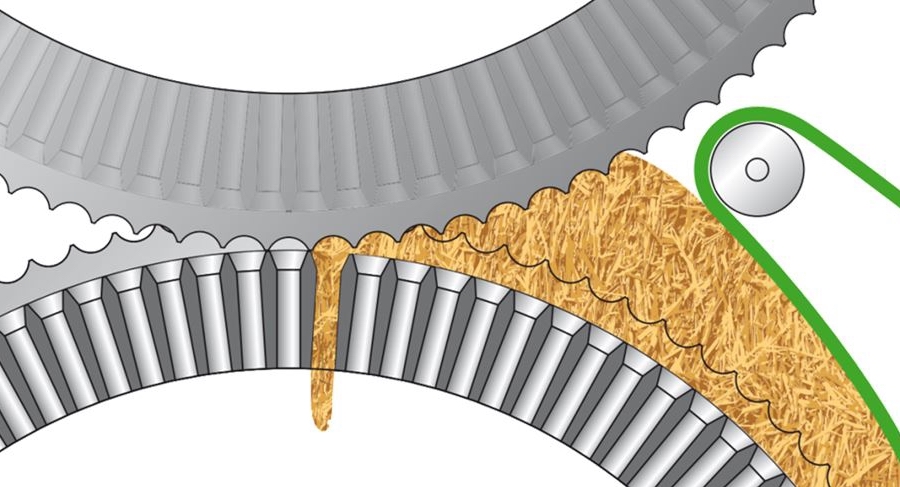

1. Rolling and Pressing
The unground crop enters between two counter-rotating, interlocking die rolls, which are alternately equipped with rows of toothed and perforated dies. The teeth on one roller seal off the channels in the perforated die on the other roller and force the material through the channels of the perforated die. This process generates pressures of up to 2,000 bar and temperatures ranging from 70 to 90°C.
2. Adjust the pellet length
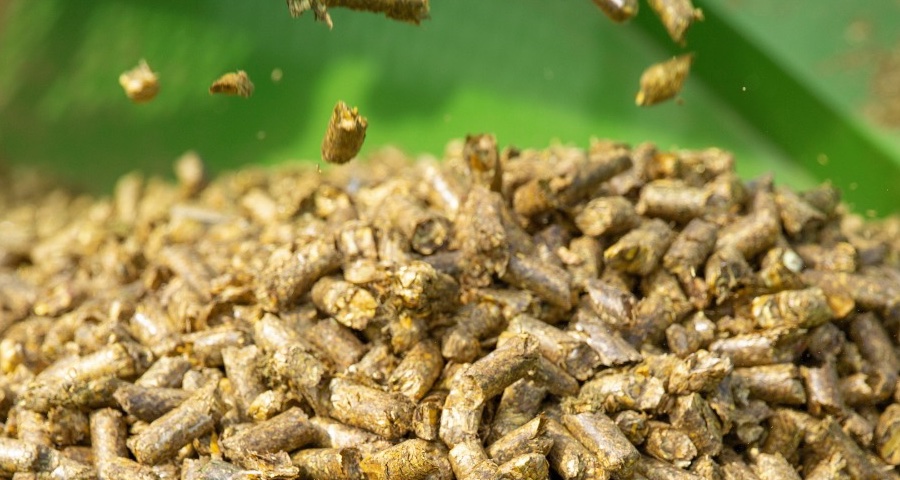
During pelletizing, the material stream is pressed through the 16-mm-diameter die holes into the interior of the roller. While the diameter of the pellets is determined by the die holes, the pellet length can be varied from 15 to 40 mm. To do this, the distance between the scrapers and the die roller is increased or decreased.

3. Sift out the fine particles
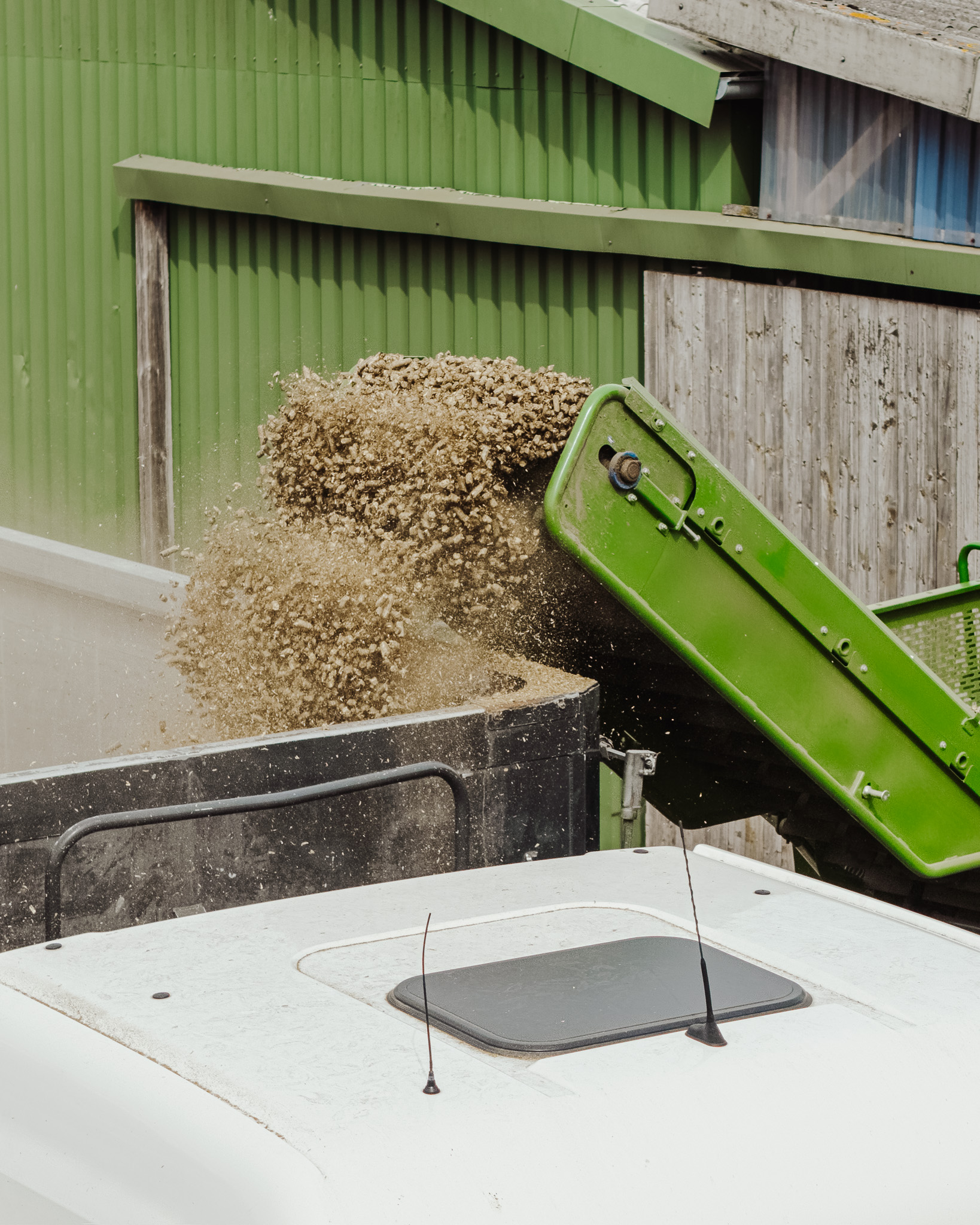
Inside the rollers, augers convey the compressed material to the elevator, which directs it through a rotating screen for dust removal. Fine particles that fall through the screen are returned to the die rollers. This process produces pellets of optimal quality that are ideal for material recycling or energy recovery.
4. Bunkering and Transshipment
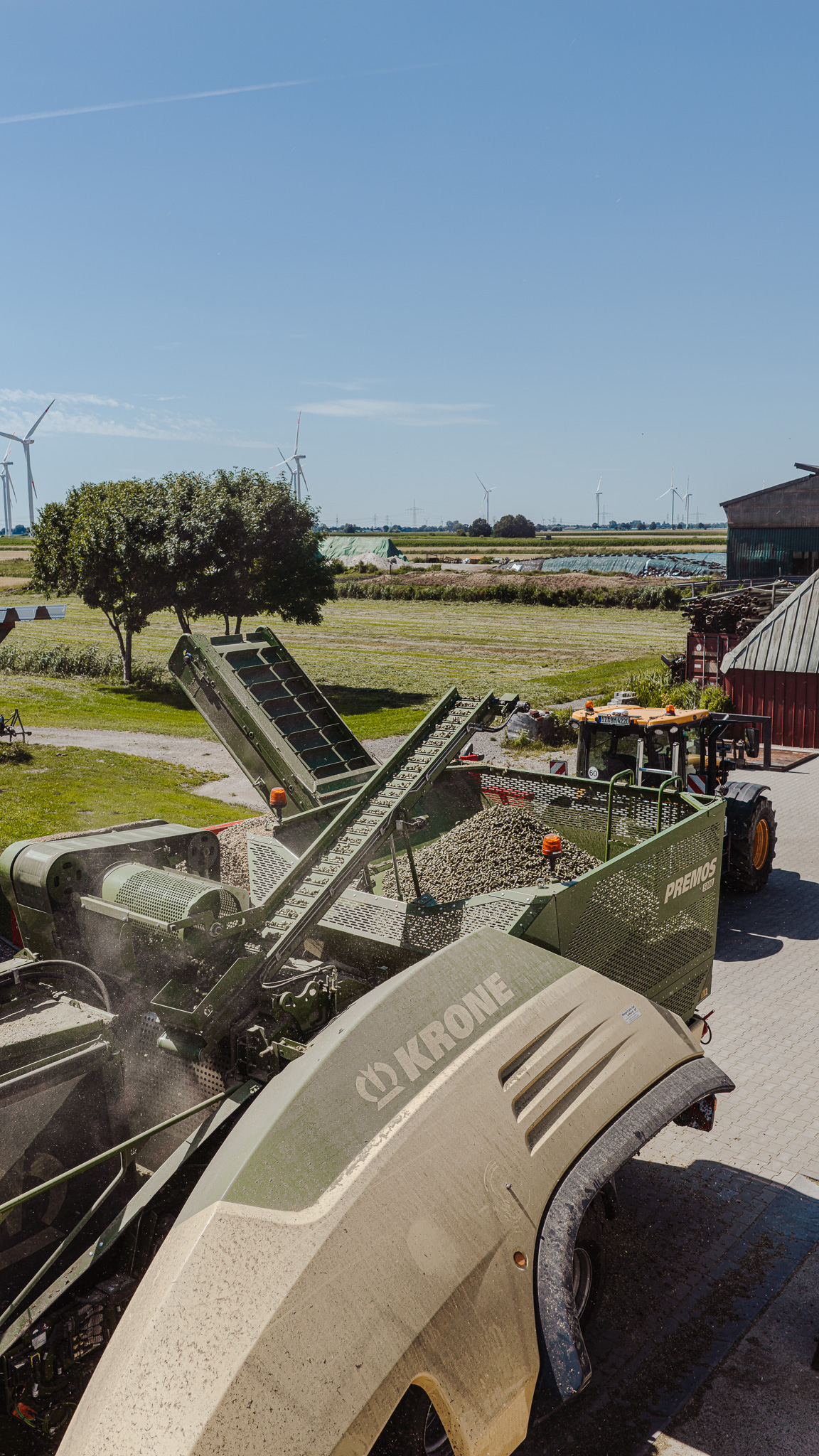
The pellets are fed into the 9 m³ bunker via a feeding conveyor. There, the pellets—which have been heated during the pressing process—are cooled by the airflow from a blower. Once the bunker, which is equipped with a weighing device as standard, is full, the pellets collected inside can be transferred to transport vehicles using a transfer conveyor.
Our products

Healthy Hay Cubes